If you’re planning new signage for a commercial property, a shopping center, or a residential community, you’ve probably run into two terms that sound similar but mean very different things. Monument signs and pylon signs both serve the same general purpose, which is to identify a property from a distance, but they’re built differently, priced differently, and suited for very different situations.
After more than a decade of designing, fabricating, and installing both types across the Greater Houston area at Uni Signs, we have helped a lot of property managers, business owners, and HOA boards figure out which one actually fits their property. Here’s the breakdown.
What Is a Monument Sign?
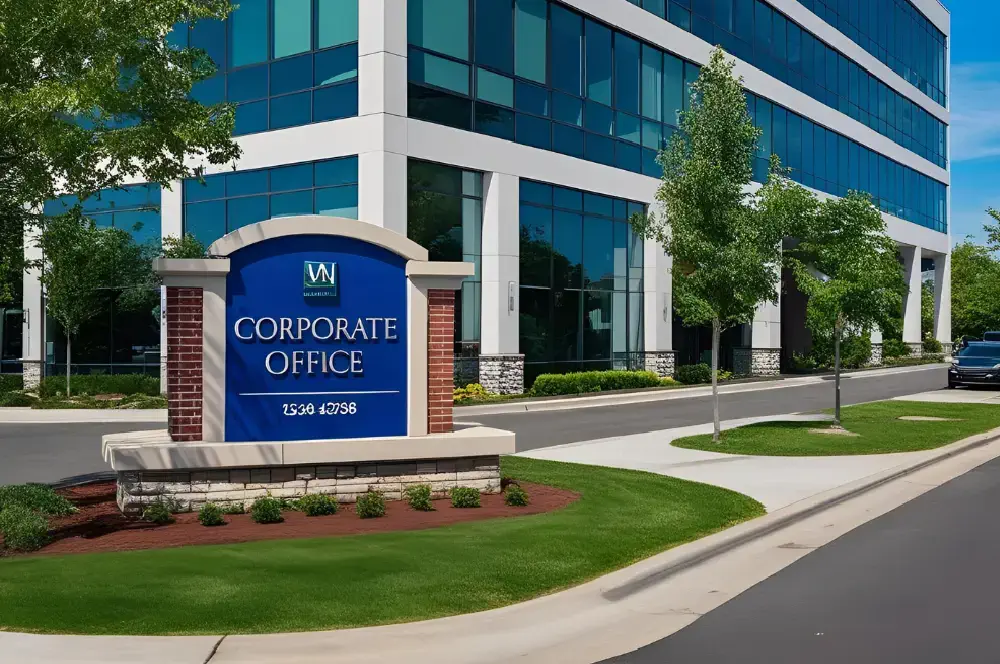
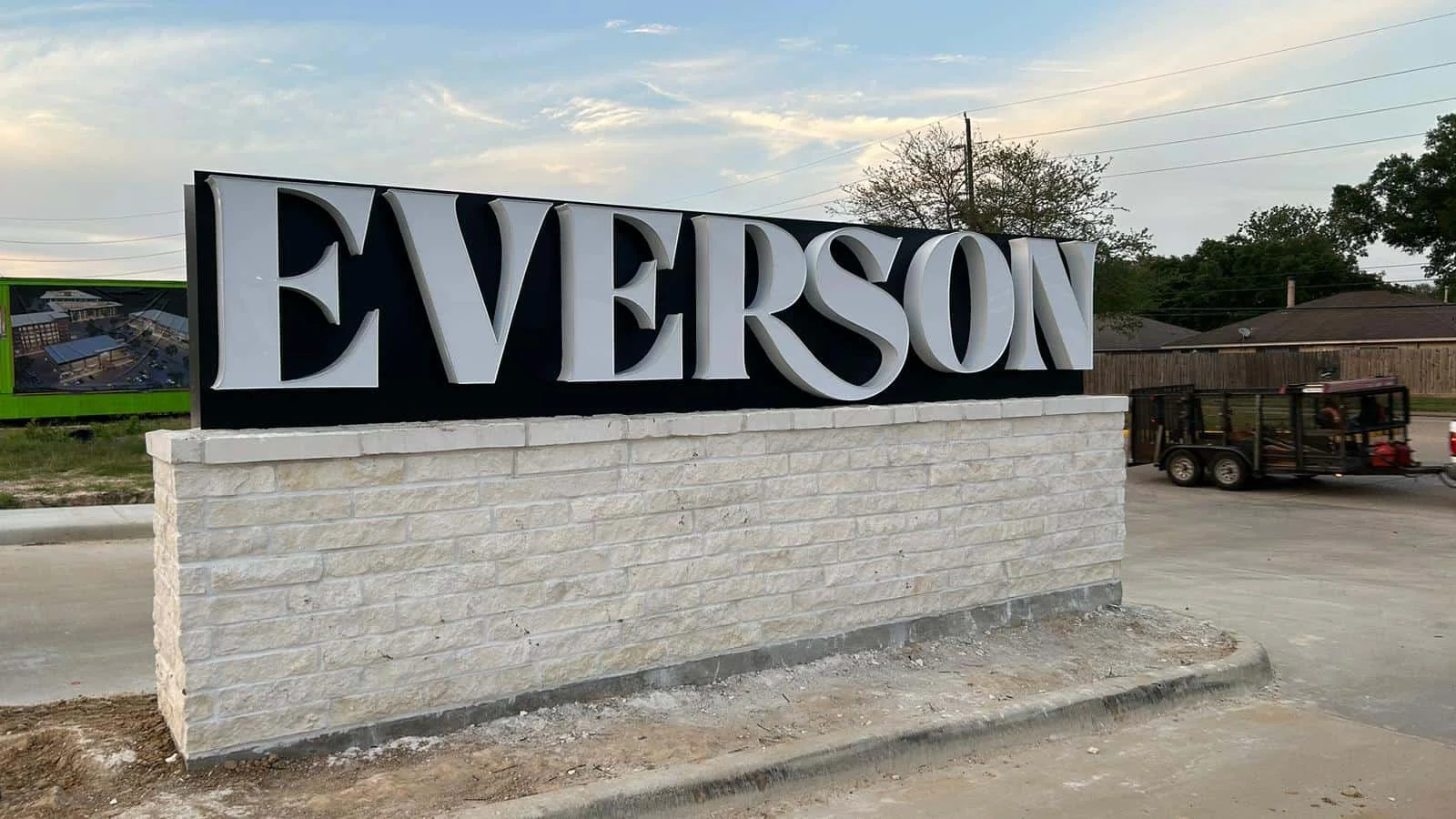
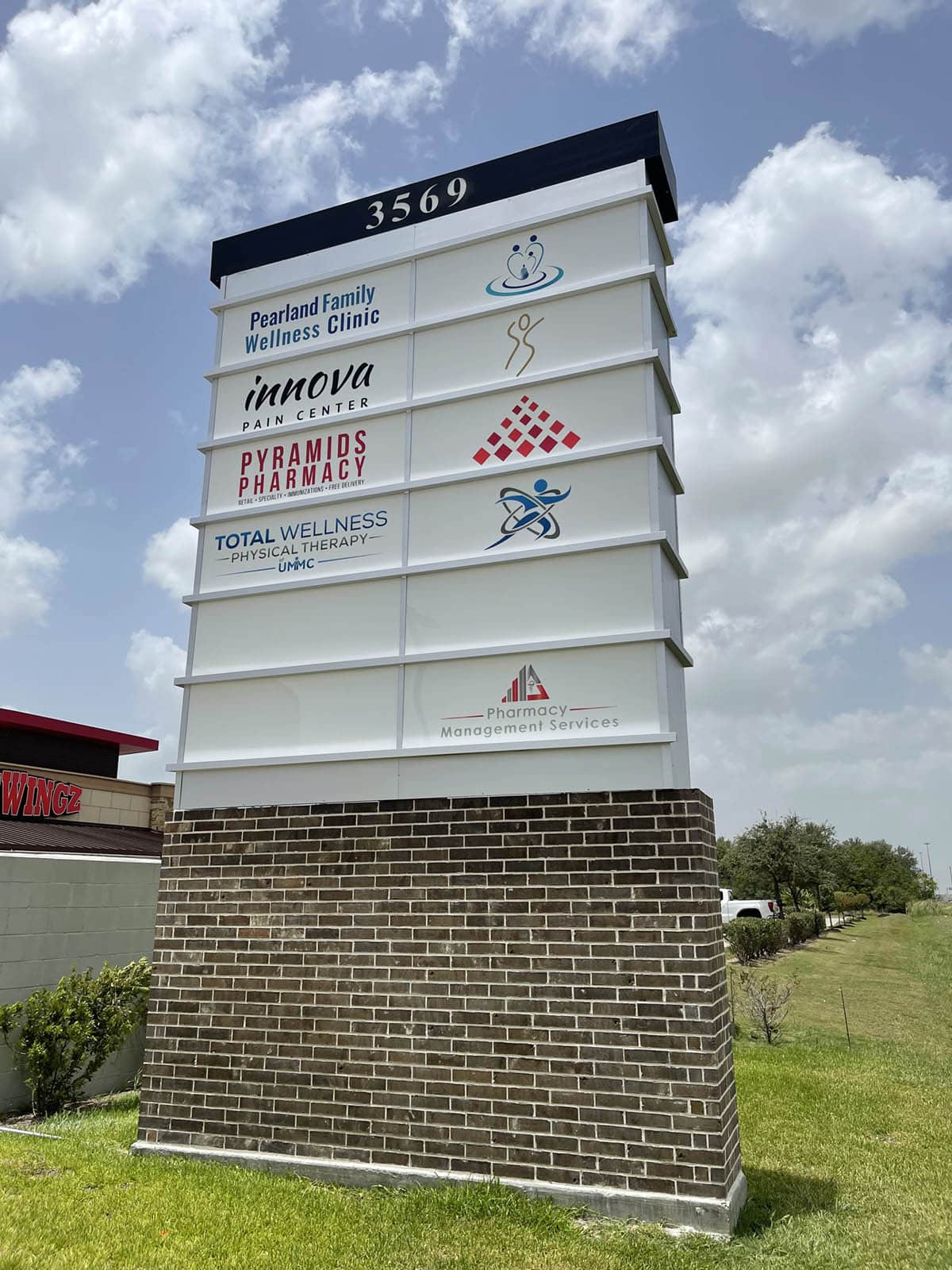
A monument sign is a freestanding sign that sits low to the ground, usually no more than six to eight feet tall, built on a solid base of stone, brick, concrete, or stucco. The sign itself is integrated into the structure, often with illuminated lettering, push through acrylic panels, or routed metal faces. Monument signs are designed to look architectural. They blend with the surrounding building and landscaping rather than calling attention to themselves through height.
You will see monument signs at residential community entrances, office parks, medical complexes, churches, schools, and high end retail centers. The look is intentional. Properties that want to project stability, exclusivity, or professional polish almost always choose monument signs over pylon signs.
What Is a Pylon Sign?
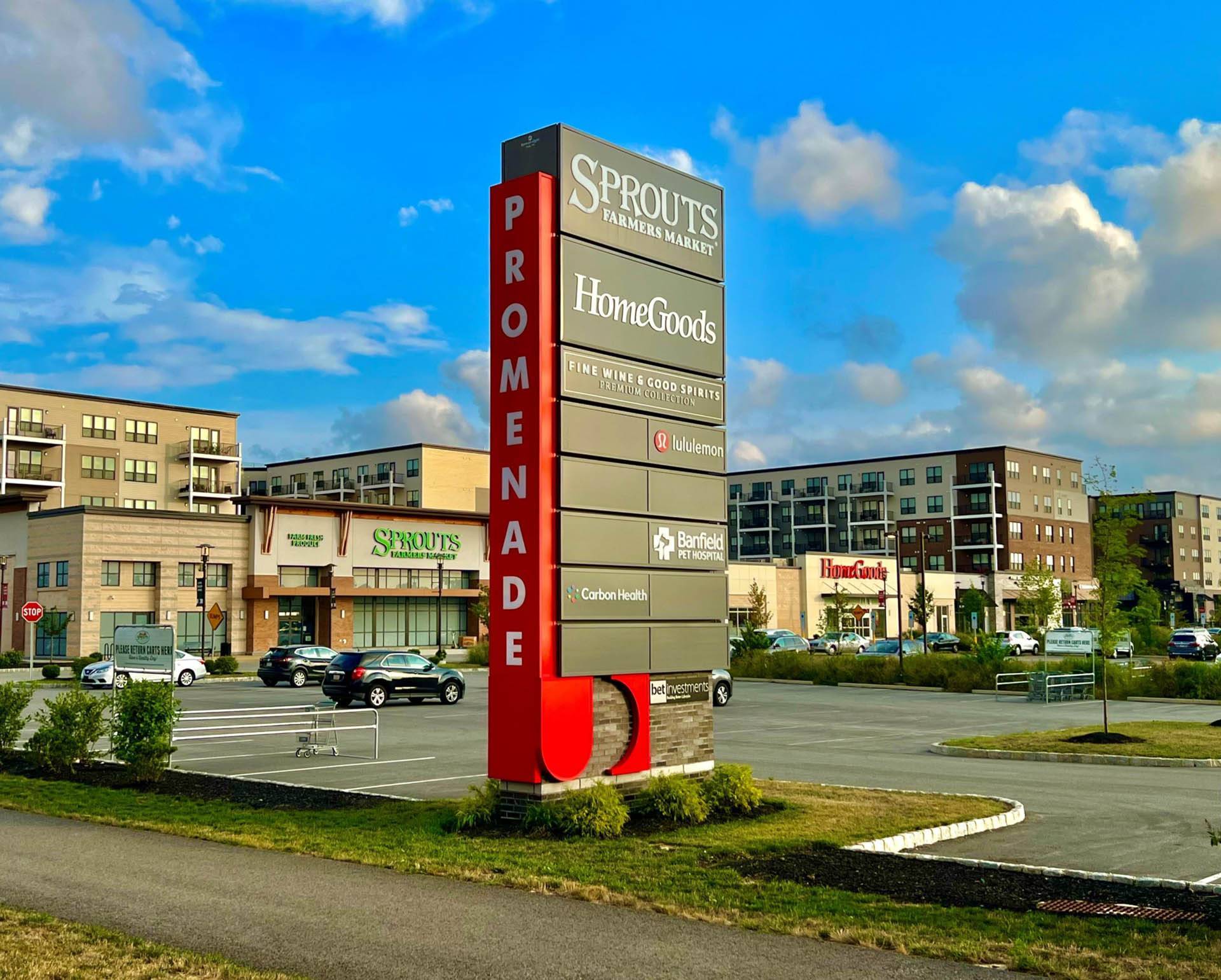
A pylon sign is a tall freestanding sign mounted on one or two steel poles, typically between fifteen and forty feet high. The sign face is elevated above eye level so it can be read from the highway, from across a parking lot, or from several blocks away. Pylon signs are visibility tools first and aesthetic features second.
You will see pylon signs at gas stations, shopping centers fronting major roads, fast food restaurants, auto dealerships, and any business that needs to be seen from a distance by drivers passing at speed. The whole point of a pylon is height and visibility. The sign face usually features multiple tenant panels stacked vertically, large illuminated logos, and bold typography meant to be readable from hundreds of feet away.
The Key Differences
The most obvious difference is height. Monument signs stay low. Pylon signs go tall. But the differences run deeper than that.
Monument signs are built to be read up close, by people who have already arrived at or near the property. A driver entering a residential community, a visitor walking into an office park, a parent dropping their child at a school. These viewers are within a few feet of the sign. The sign’s job is to confirm identity and project the right impression.
Pylon signs are built to be read from a distance, by people who haven’t yet decided whether to turn into the property. A driver on Highway 6, a commuter on I-10, a shopper deciding which exit to take. The sign’s job is to grab attention and pull traffic in.
Permitting is also significantly different. Pylon signs typically require more engineering, larger permits, and more municipal scrutiny because of their height and structural requirements. Many Houston area cities and master planned communities have strict pylon height limits or outright bans on new pylons in certain zones. Monument signs face fewer restrictions and are usually easier to permit, especially in residential or mixed use areas.
Cost is another factor that splits these two categories. We’ll get into specifics below.
When to Choose a Monument Sign
A monument sign is the right choice when your property is already located somewhere visible, but you need to identify it clearly and impressively to people who are arriving on site. Think of any of these situations.
You’re an HOA board member and your residential community needs a refreshed entry sign. The community is set back from the main road, residents and guests slow down before turning in, and the sign needs to communicate the neighborhood’s identity rather than draw highway traffic. A monument sign is the obvious answer.
You’re a property manager for a multi tenant office park. Tenants want their names visible at the entry, the property has its own access road, and the goal is professionalism. A monument sign with backlit tenant panels works perfectly.
You’re a medical practice, law firm, or financial services office in a standalone building. Your clients already know where you are because they made an appointment. The sign’s job is to confirm they’ve arrived and project authority. A monument sign nails this.
You manage a church, school, or community institution where understated permanence matters more than highway visibility. Monument signs are practically the default for these properties.
When to Choose a Pylon Sign
A pylon sign is the right choice when your property’s success depends on capturing drive by traffic that doesn’t yet know you exist. Specific situations where pylons earn their cost.
You operate a shopping center, strip mall, or commercial retail property on a major Houston corridor. Multiple tenants share the property, and the difference between fifteen feet of visibility and forty feet of visibility is the difference between drivers passing by and drivers turning in. A pylon sign is essential.
You run a gas station, convenience store, or quick service restaurant near a highway exit. Your business model depends on impulse stops from drivers who hadn’t planned to pull in. Without a tall pylon, you simply don’t exist in the decision making moment.
You own an auto dealership, RV lot, or large outdoor retail space. You need to communicate scale and identity from far away, often from the highway itself.
You’re a developer of a new mixed use commercial center and you need to attract retail tenants. A prominent pylon is a leasing tool. Tenants pay more for spaces with strong pylon visibility.
What Each Type Actually Costs
Pricing varies widely based on size, materials, lighting, and installation complexity, but here are realistic ranges based on commercial projects we have delivered around Houston.
Monument signs in the Houston market typically run between fifteen thousand and forty thousand dollars for a quality installation. Smaller HOA entry signs at the lower end of that range, larger multi tenant office park monuments with backlit panels, stone bases, and landscaping integration at the higher end. Premium monument signs with high end stone, complex illumination, or custom dimensional logos can push past fifty thousand. Smaller monument projects such as face changes, LED upgrades, or refurbishments to existing monuments typically run between three thousand and five thousand dollars.
Pylon signs run higher, typically between twenty five thousand and eighty thousand dollars for a quality installation. The cost driver is the engineering, the steel structure, the foundation work, and the height itself. Multi tenant pylons with three to six tenant panels at twenty to forty feet of height are the most common pylon projects in the Houston area and sit in the middle of that range. Massive highway pylons can exceed a hundred thousand dollars.
Both types include permitting, engineering, electrical work, and installation costs that vary by city. Houston, Katy, Sugar Land, Pearland, and Cypress all have different permit fees and review timelines. We handle the entire permit process in house at Uni Signs, so the cost ranges above include those administrative pieces.
What Property Managers and HOA Boards Should Know
If you’re managing a property or sitting on an HOA board, here’s what most people don’t realize until they’re already shopping for signs.
Replacement and upgrade timing matters. If your monument or pylon was installed more than ten or fifteen years ago, the technology has changed significantly. LED illumination has replaced fluorescent and neon. Push through acrylic has replaced flat painted panels. New monuments and pylons are dramatically more efficient, brighter, and cheaper to operate long term.
Board approval and budget timing should start at least three to six months before you need the sign installed. Permits alone can take six weeks in some Houston metro cities. Add design, fabrication, and installation, and you are looking at a two to four month total timeline.
Landlord and master association approvals are often required even when the sign is on your property. Don’t skip this step. We’ve seen finished sign projects sit in storage for weeks because someone forgot to get sign off from the property association.
How Uni Signs Approaches These Projects
We design, fabricate, and install both monument and pylon signs in house at our Katy facility. That means one vendor handles the entire process from initial consultation through final installation, with no subcontractors and no handoffs that lose context.
For monument signs, we work directly with HOA boards, property managers, and business owners to design something that fits the architectural character of the property. We handle permits, engineering, landscaping integration, and electrical work. For pylon signs, we manage the heavier engineering, foundation work, height permits, and tenant panel coordination that pylons require.
If you are trying to decide between a monument sign and a pylon sign for your property, the easiest next step is to schedule a free on site consultation. We will look at the property, talk through your goals, and give you a clear recommendation based on what will actually work for your situation.
Ready to Talk About Your Property’s Signage?
Call Uni Signs at (832) 590-3690 or visit uni-signs.com to schedule your free consultation. We serve the entire Greater Houston area including Katy, Sugar Land, The Woodlands, Cypress, Pearland, and beyond.