Your sign is faded, half-lit, or still carries a logo you stopped using three years ago. You call a sign company and get two very different numbers back: one in the hundreds, one in the thousands.
The cheap one is refacing. The expensive one is replacement. Most business owners pick on price alone, and sometimes that works out fine — and sometimes it costs them far more than they saved.
Here’s how to actually decide.
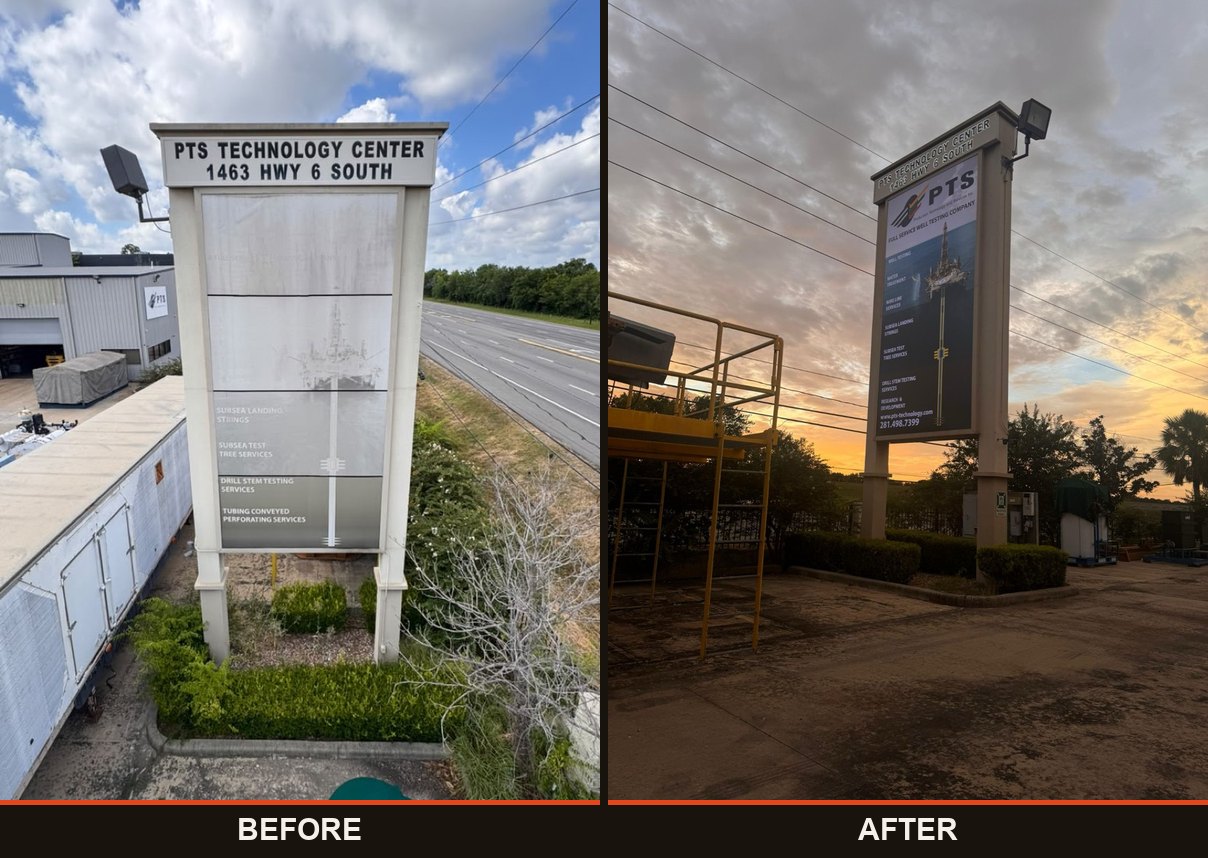
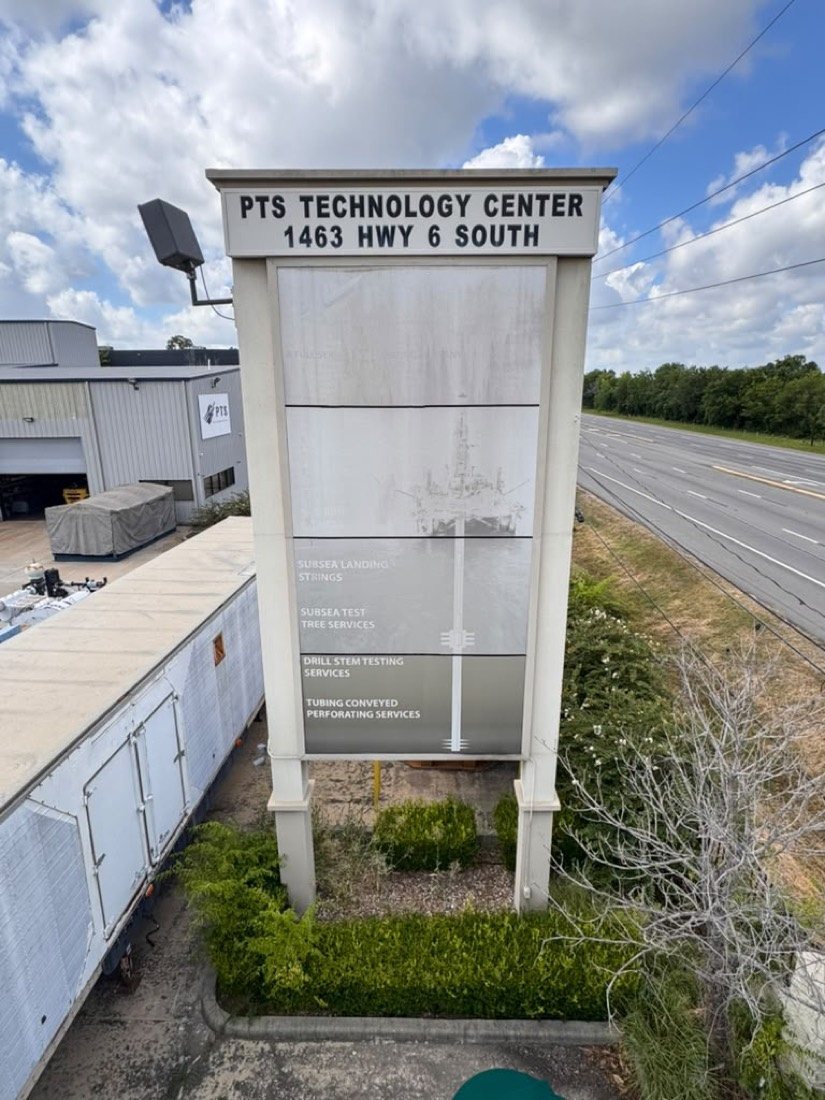 Before
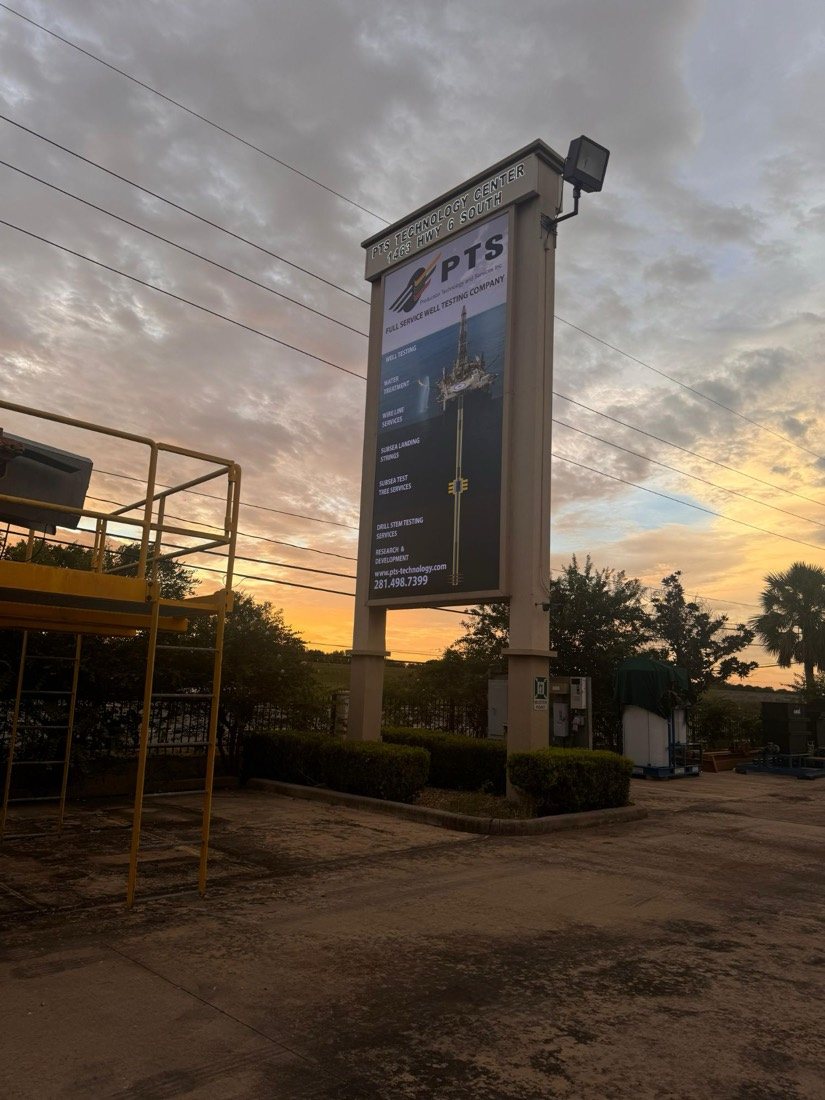 After
What refacing means
Refacing replaces the face of a sign — the translucent panel with your name and logo on it — while keeping the cabinet, the frame, the structure and usually the lighting. On a monument sign, it can also mean new letters on an existing masonry base, or new tenant panels in an existing directory.
What stays: the box, the mounting, the electrical, the foundation, the permit.
What changes: everything your customer actually looks at.
When a cabinet is sound, refacing is one of the best values in the sign business. You get a brand-new appearance for a fraction of a new sign, usually in a fraction of the time, and with a far simpler permit path. In the City of Houston, a face change on an existing sign still goes through Sign Administration — but as a refurbishment or alteration, not as a new sign.
When refacing is the right call
Your cabinet is structurally sound. No rust at the corners, no water sitting inside, no soft spots in the frame, no sag. If the box is solid, keep it.
You’re rebranding, not resizing. New logo, new name, new colors — same footprint. This is the classic refacing job and the one we do most.
A tenant changed. In a multi-tenant directory or pylon, panels are designed to come out individually. Replacing the whole sign because one tenant left is a waste.
Your face is just tired. Acrylic and polycarbonate yellow and craze under fifteen Houston summers. The cabinet underneath is often perfectly fine.
You want to switch to LED. If your cabinet still runs fluorescent tubes, a reface is the natural moment to retrofit the inside to LED. You get a brighter, more even sign, a sharp drop in energy use, and you stop paying someone to swap ballasts and tubes. It’s the single best-value upgrade available on an old cabinet.
One caution on that last one: if your sign is grandfathered (see below), combining a reface with a change to the illumination can be treated as new sign work rather than refurbishment. Worth checking before you bundle the two.
When refacing is a bad idea
The cabinet is corroding. New faces on a rusting box is money thrown at a problem that will come back — and when the box finally fails, the new faces go in the dumpster with it.
The size or shape has to change. Longer name, different proportion, you want to go from a box to channel letters. A face can’t change the outline.
The style is the problem. A 1990s internally-lit plastic box reads as a 1990s plastic box no matter what you print on it. If you’re repositioning the business upward, the cabinet itself is sending the wrong message. Channel letters or a dimensional sign is a different conversation.
It’s about to be repaired twice. If the sign already needs electrical work, structural work and new faces, you are most of the way to the cost of a new sign with none of the warranty.
The part nobody tells you: refacing can protect your sign’s size
This is where the decision stops being about money.
Sign codes change. Many existing signs in the Houston area are legal nonconforming — taller, larger, or closer to the street than today’s rules would allow, and legal only because they were permitted under the older code. The sign is grandfathered.
Grandfathering protects the sign that exists. It does not always survive replacing it.
Change the faces and, in most jurisdictions, the sign remains the same permitted sign. Tear the structure out and put up a new one, and you may be building to today’s rules — which can mean a shorter pylon, a smaller cabinet, or a different setback than the one you have now.
For a business whose visibility depends on being seen from a freeway feeder or a six-lane road, that is not a technicality. It is the difference between a sign that works and one that doesn’t.
Grandfathering can also lapse on its own. Most codes end it if the sign is abandoned for a set period, or if it’s destroyed beyond a certain percentage — a storm or a vehicle strike can quietly cost you a status you’ve had for twenty years.
Two more Houston-area specifics worth knowing:
- In the City of Houston, on-premise sign permits are annual operating permits, not a one-time fee. If you inherited a sign with a property, confirm it is current before you plan anything.
- In the City of Houston, the permit goes to whoever does the work. If you hire anyone, that company must be a licensed sign contractor and they pull the permit — you cannot pull it yourself and hand the job to someone else. A business owner can only permit a sign they install themselves, and only small non-electrical ones: a ground sign under 60 sq ft and 8 feet tall, or a wall sign no more than 16 feet above grade. Anything illuminated, taller, or installed by a third party goes through a licensed contractor. Here’s the full process.
Before you commit to replacing a sign that is larger or taller than current code allows, find out what you’d be allowed to rebuild. Sometimes the answer makes refacing an easy decision.
What each one costs
Real ranges, not marketing numbers:
| Typical range | Timeline | |
|---|---|---|
| Face replacement, single cabinet | Hundreds to low thousands, by size | 1–2 weeks |
| Reface + LED retrofit | Mid thousands | 2–3 weeks |
| Tenant panel, existing directory | Per panel, modest | About a week |
| New channel letter storefront sign | $3,000–$8,000 | 3–4 weeks + permit |
| New monument or pylon sign | Substantially more — engineering, foundation, crane | 6–12 weeks + permit |
Replacement costs more than the sign itself. A new freestanding sign over a certain height needs sealed structural engineering, an engineered foundation, and crane work on installation day. Those are real line items, and they’re why the gap between refacing and replacing is wider on monuments and pylons than on wall signs.
A short diagnostic you can run yourself
Walk out to your sign in daylight, then come back after dark.
- Push gently on the cabinet. Any flex or movement at the mount?
- Look at the bottom corners. Rust streaks, standing water, soft metal?
- Check for water inside the faces. Staining or condensation means the seal is gone.
- After dark, is it evenly lit? Dark patches and bright spots usually mean failing lamps or drivers, not failing faces.
- Is the face yellowed or crazed — that fine web of surface cracks in old acrylic?
- Does the size still work? Stand where your customer first sees it. Can you read it at that distance?
- Is your branding current? Old logo, old phone number, a tenant who left?
Mostly items 5, 6 and 7 → reface.
Items 1, 2 or 3 → the cabinet is the problem, and new faces won’t fix it.
Item 4 alone → you may just need a lighting retrofit, which is cheaper than either.
How we handle it
We come look at it. No charge.
We check the cabinet and the structure, test the electrical, verify the permit status on your address, and tell you which of the three options actually fits — reface, retrofit, or replace. If refacing is the right answer, we’ll tell you that, even though it’s the smaller job. A sign that fails in two years isn’t a sale we want.
If you’re a property manager with several signs across a portfolio, we’ll walk all of them and put together a prioritized plan — what needs attention now, what can wait a year, and what should be replaced when the budget allows.
Call UNI Signs at (832) 590-3690, or request a free on-site evaluation.
We design, fabricate, permit and install across Katy, Houston and Fort Bend County, with 140+ five-star Google reviews and a 5-year workmanship warranty.
Frequently Asked Questions
What does refacing a sign mean?
Refacing replaces the translucent face panel of a sign — the part with your name and logo — while keeping the existing cabinet, frame, structure and usually the lighting.
Is it cheaper to reface or replace a sign?
Refacing is substantially cheaper. A single cabinet face replacement runs from the hundreds into the low thousands, while a new channel letter storefront sign typically runs $3,000 to $8,000, and a new monument or pylon costs considerably more because of engineering, foundation and crane work.
Can replacing my sign make it smaller?
It can. Many existing signs are legal nonconforming — larger or taller than current code allows, and legal because they were permitted under an older code. Refacing generally preserves that status; removing and replacing the structure can require building to today’s rules.
Do I need a permit to reface a sign?
Usually yes, though it’s a much smaller process than a new sign. It depends on the jurisdiction and on whether the change counts as a refurbishment or an alteration. In the City of Houston, on-premise sign permits are annual operating permits, and the permit is issued to whoever performs the work.
Should I retrofit my fluorescent sign to LED?
If the cabinet is sound, yes — a reface is the natural moment to do it. LED gives brighter, more even illumination, cuts energy use, and eliminates the recurring cost of replacing ballasts and tubes. If the sign is grandfathered, check first whether the illumination change affects that status.